
The short version
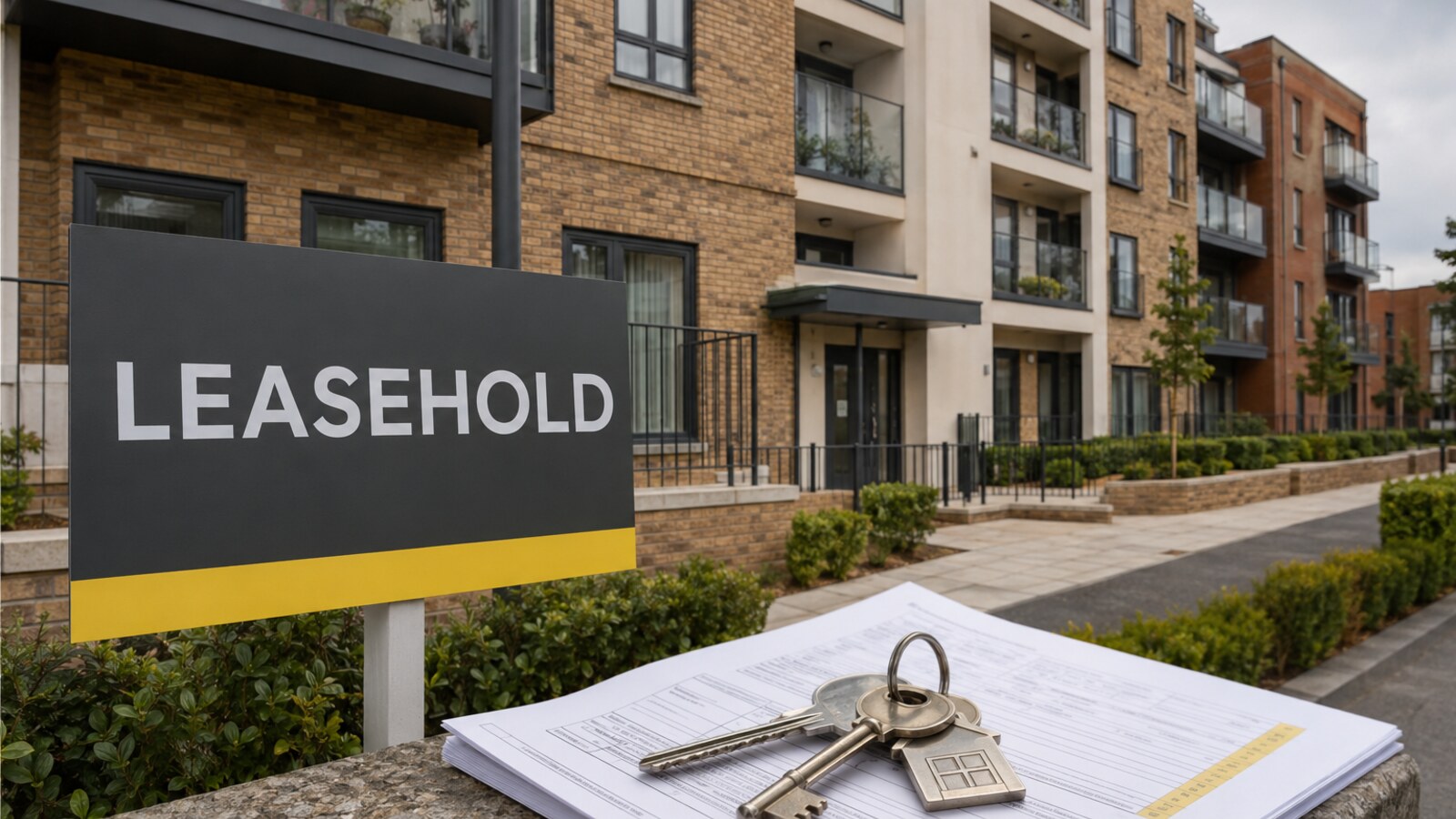
Leasehold flats are taking longer to sell, and investors are securing some of the largest discounts seen since 2020. That creates opportunity, but a flat is not cheap simply because the seller has knocked 10% off. The lease, service charge, building finances, mortgageability and eventual buyer pool determine whether the discount is real.
Something strange is happening in the UK property market. Leasehold flats are apparently “dead”, yet some carefully selected developments are selling to investors within hours.
Those two things can both be true.
The average flat can be difficult to sell while a well-priced flat in the right location still attracts serious demand. Property markets are rarely one market. They are thousands of small markets wearing one oversized headline.
The useful question is not whether flats are good or bad. It is whether today’s weak demand has pushed some genuinely sound properties below fair value, or whether investors are being tempted by discounts that fail to cover the risks.
The flat market really is struggling
Zoopla data reported in August 2026 found that 80.5% of flats listed during 2025 had not found a buyer after roughly six months. The proportion reached about 87% in London, 85% in the South East and 84% in the East of England.
A later Zoopla analysis of leasehold flats listed during the final quarter of 2025 put the unsold proportion at 87% across England and Wales. That does not contradict the earlier figure. It covers a narrower and later listing period, when conditions had deteriorated further.
| Market measure | Result | What it means |
|---|---|---|
| Flats listed during 2025 still unsold after about 6 months | 80.5% | Liquidity is much weaker than the headline housing market suggests |
| London | 87% | High service charges and stretched affordability are narrowing the buyer pool |
| South East | 85% | Flat sellers face strong competition and price sensitivity |
| East of England | 84% | The problem extends well beyond central London |
Source: Zoopla analysis reported by The Guardian and Financial Times, August 2026.
Flats have also badly lagged houses over the longer term. Zoopla’s figures suggest average house prices rose 43% between 2016 and 2026, while flats increased by only 10%.
That gap is exactly what attracts investors. A neglected asset can offer opportunity. It can also be neglected for very good reasons.
Investors are negotiating like it is 2020
Separate Hamptons research based on Connells Group transactions shows how much leverage buyers currently have.
In July 2026, 56% of investor offers were at least 10% below the original asking price. That was the highest proportion since the first Covid lockdown in April 2020. Among cash-backed landlords, the figure reached 63%.
Investors paid an average of 88.7% of the initial asking price, while 27% of investor offers at least 10% below asking were accepted. For leasehold flats, the acceptance rate on these heavily discounted offers reached 41%.
My view: asking-price discounts make good headlines, but the asking price is not the value. A seller can list a £180,000 flat for £200,000, accept £180,000 and technically give you a 10% discount. You have not beaten the market. You have bought it at the price it should have been listed for.
Why buyers have turned against flats
First-time buyers are central to the flat market. They are also among the buyers most exposed to mortgage affordability tests, deposit constraints and higher monthly costs.
A flat may be cheaper than a house, but the buyer must add the service charge, ground rent where applicable and any known major works to the mortgage payment. Zoopla estimates the average leasehold flat service charge at about £1,900 a year, rising to roughly £2,500 in London.
Then there are the issues that do not fit neatly into an online mortgage calculator:
- Short or declining lease terms
- Escalating ground-rent clauses
- Cladding and building-safety documentation
- Large Section 20 major-works bills
- Poorly funded reserve or sinking funds
- Disputes with the freeholder or managing agent
- Lender restrictions on the building, lease or commercial premises below
- Restrictions on subletting, pets or alterations
None of these makes every flat uninvestable. Together, however, they explain why buyers demand a larger margin of safety.
A 10% discount can disappear surprisingly quickly
Here is an original illustration. These are not market averages or a recommendation. I have held the rent constant to show how the running cost can overturn the apparent purchase discount.
| Illustrative flat | Full-price flat | 10% discounted flat |
|---|---|---|
| Purchase price | £200,000 | £180,000 |
| Monthly rent | £1,100 | £1,100 |
| Annual rent | £13,200 | £13,200 |
| Annual service charge | £2,400 | £4,800 |
| Gross yield | 6.60% | 7.33% |
| Yield after service charge only | 5.40% | 4.67% |
Illustration excludes mortgage costs, management, maintenance, voids, insurance, tax, legal costs and major works.
The cheaper flat produces the stronger gross yield, yet the higher service charge leaves it with the weaker yield before most other costs have even been considered.
This is why I never judge a flat by gross yield alone. A service charge is not a footnote. It is an operating cost, an affordability constraint for the next buyer and a risk if the building is badly managed.
Are the current problems temporary?
Some are. The cladding backlog is moving, mortgage rates will not remain at one level forever and the government is progressing leasehold reform.
In January 2026, the government published its draft Commonhold and Leasehold Reform Bill. It proposes capping existing ground rents at £250 a year before reducing them to a peppercorn after 40 years, strengthening commonhold and restricting new leasehold flats.
In July 2026, ministers confirmed that clearer service-charge demands, annual building reports and stronger protections over legal costs are expected to begin from 2027.
That is progress, but investors should not buy a bad lease on the assumption that future legislation will rescue them. Proposed reform, enacted law and rules already in force are three different things.
I explained that distinction in my earlier guide, Leasehold Property in the UK: Pros, Cons and the 2026 Reforms Explained.
THE TRAP
Treating every leasehold problem as temporary. Mortgage rates can change. Buyer confidence can recover. A badly drafted lease, an underfunded building and an imminent £20,000 major-works bill do not disappear because sentiment improves.
My position on leasehold flats
I am not automatically against leasehold property. I would buy a leasehold flat if the numbers and paperwork made sense.
I would want a healthy lease length, reasonable and transparent service charges, a properly funded reserve, no obvious management dispute and no major works waiting to land immediately after completion. If I planned to rent it, I would also check the subletting clause before treating the projected rent as income.
My position has not changed because flats are now cheaper. If anything, the weak market makes due diligence more important. A large discount may be compensation for poor liquidity rather than a free gift from the seller.
Leasehold is not automatically a reason to walk away. A bad lease, bad management and bad numbers are.
My leasehold-flat buying test
| Check | Possible opportunity | Possible trap |
|---|---|---|
| Price | Below recent completed sales in the same block or nearby comparable blocks | Only discounted from an inflated asking price |
| Lease | Long term, clear clauses and lender-friendly ground rent | Short term, escalating rent or unclear restrictions |
| Service charge | Transparent accounts and sensible value for the services supplied | Rapid increases, unexplained spending or persistent arrears |
| Reserve fund | Adequate reserves supported by a maintenance plan | Little cash despite major works approaching |
| Building safety | Required documentation available and accepted by mainstream lenders | Unresolved works, missing evidence or cash-only resale risk |
| Exit market | Affordable to local first-time buyers as well as investors | Works only if another landlord accepts the same yield assumptions |
The video explanation
I have also broken down the advantages, risks and changing leasehold rules in this video:
For more practical analysis on property, investing and personal finance, subscribe to The Anxious Investor on YouTube.
The bottom line
The leasehold-flat market is weak enough to create genuine opportunities. It is also weak enough to hide serious problems behind attractive discounts. Buy the building, lease, cash flow and eventual exit, not the percentage supposedly knocked off the asking price.
Sources
- Financial Times: Nearly nine in 10 leasehold flats still on the market after six months
- The Guardian: Why flats in England are not selling
- The Guardian: Landlords drive harder bargains in a weaker market
- LandlordZONE summary of Hamptons and Connells Group transaction data
- GOV.UK: Draft Commonhold and Leasehold Reform Bill
- GOV.UK: Stronger leasehold protections and service-charge transparency
Related reading
Written by Aren Deu | The Anxious Investor



Leave a Reply