
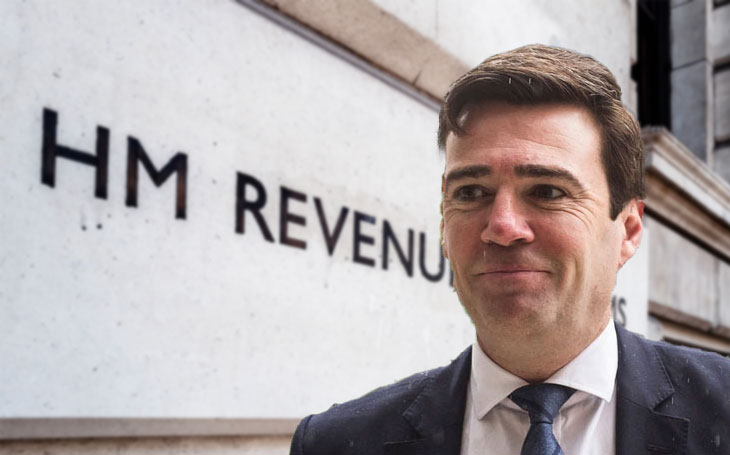
Andy Burnham has put Britain’s outdated property tax system back under the spotlight just weeks into his premiership. Council tax in England is still based on 1991 property values, while proposals being discussed range from a proportional property tax to taxing land itself. Nothing has been confirmed, but homeowners in London and the South East have the most reason to pay attention.
Andy Burnham didn’t wait long. Within weeks of becoming Prime Minister, he used one of his first major broadcast interviews to raise a problem governments have avoided properly dealing with for decades: the way Britain taxes property doesn’t make much sense anymore.
His argument is difficult to dismiss on the numbers alone. Someone living in a relatively modest property in Greater Manchester can pay considerably more council tax relative to the value of their home than somebody sitting in a property worth far more in London. That sounds strange until you realise the system is still anchored to property values from 1991.
Not 2021. Not even 2001. In England, council tax bands are based on what a property would have been worth on 1 April 1991. That means we’re trying to tax the 2026 housing market using valuations from 35 years ago, despite property prices moving in completely different directions around the country since then.
The problem isn’t simply that council tax is old. It’s that the housing market changed and the tax system didn’t change with it.
London is the obvious example. Property values across much of the capital exploded over the following decades, while large parts of the Midlands and North experienced much slower growth. Yet council tax never properly reset around those new values. The result is a system where 2 households living in homes with wildly different market values can end up with council tax bills that are surprisingly close together.
Burnham’s position is that this needs reform. The much harder question is what replaces it, because there are several very different ideas being discussed and they create very different winners and losers.
One of the most interesting proposals comes from the Fairer Share campaign, which has advocated replacing both council tax and Stamp Duty Land Tax with a proportional property tax. Instead of putting properties into bands, the basic idea is to charge an annual percentage of what the property is actually worth today.
The proposed rate is 0.48%. On a £300,000 home that works out at £1,440 a year. On a £500,000 home it becomes £2,400. Once you get into London property values, however, the numbers become much more significant. A £1 million property produces a £4,800 annual bill and a £2 million property produces £9,600.
| Property value | 0.48% annual tax | Monthly equivalent |
|---|---|---|
| £200,000 | £960 | £80 |
| £300,000 | £1,440 | £120 |
| £500,000 | £2,400 | £200 |
| £1,000,000 | £4,800 | £400 |
| £2,000,000 | £9,600 | £800 |
That doesn’t automatically mean everyone in an expensive property loses. Fairer Share’s proposal is designed as a replacement for council tax and stamp duty rather than simply another tax layered on top. Removing stamp duty would matter enormously to people buying and moving home because it removes a large upfront transaction cost. The trade-off is obvious though: instead of getting hit when you buy, you potentially create a tax liability that follows you every year you continue owning the property.
This is where London becomes the political headache. A tax based much more closely on today’s property values naturally shifts the burden towards places where property values have increased the most. That means London and parts of the South East potentially lose one of the strange advantages created by the existing council tax system.
But property value and income aren’t the same thing. Somebody who bought a London house for £100,000 decades ago could now be sitting in a property worth £1 million without having anything remotely resembling a millionaire’s income. Any serious reform therefore has to answer what happens to people who are property rich but cash poor. Deferrals, allowances and transitional arrangements sound boring, but they could end up determining whether a new system is workable at all.
And proportional property tax isn’t the only idea in circulation. Burnham has previously shown interest in taxing land differently, which brings land value taxation into the conversation. Instead of taxing the entire property, the tax is based primarily on the underlying land value. Supporters argue that land is difficult to hide, move or manufacture, making it an efficient thing to tax. The problem is that valuing land separately from the building sitting on it across millions of properties is not exactly something you knock out over a quiet weekend.
The government could also choose something far less dramatic. Rather than ripping up council tax completely, it could extend existing taxes on expensive homes, revalue council tax bands, create additional bands at the top or alter thresholds on the higher-value property charges already introduced. Politically, tinkering with the existing system may be much easier than replacing it.
The important signal isn’t necessarily which property tax wins. It’s that property wealth is clearly back in the tax conversation.
There is another reason the timing matters. London’s housing market is already noticeably weaker than the rest of the country. The latest ONS figures put the average UK house price at £271,000 in May 2026, up 2.7% over 12 months. That annual growth rate had slowed from 3.9% in April.
London went in the opposite direction. Prices fell 3.7% over the year to May, making it the ninth consecutive month of annual house price declines in the capital. Dig underneath that number and the divide gets sharper again. Outer London fell just 0.3%, while Inner London dropped 5.9%.
That doesn’t prove tax speculation is causing London prices to fall. There are far too many variables in the housing market to make that leap, including mortgage costs, affordability, transaction taxes and wider economic conditions. But it does mean the government is discussing the taxation of expensive property at a time when the part of the country most exposed to those reforms is already underperforming.
Landlords have another problem to think about. Council tax is generally the occupier’s responsibility under the current system, subject to various exceptions. If a future property or land tax were instead structured as an ownership tax, the economics change considerably because it becomes another direct annual cost of holding the asset.
Take a £500,000 rental property. At 0.48%, the theoretical charge is £2,400 every year. That doesn’t mean the landlord simply increases the rent by £200 a month and carries on as normal. Rents are ultimately constrained by what tenants can and will pay. In a weak rental market the landlord may absorb much of the cost. In a market with severe supply shortages, some could eventually feed through into rents. The actual effect would depend on how the tax was designed and who was legally responsible for paying it.
There is also a legitimate argument in favour of moving taxation away from transactions. Stamp duty makes moving expensive. A family wanting a larger home, an older couple downsizing or somebody moving across the country for work can all face a significant tax bill simply because they changed property. Economically, that can discourage transactions and reduce mobility.
A recurring property tax flips that model around. Buying becomes cheaper upfront, but holding the property becomes more expensive over time. Someone moving frequently could potentially benefit. Someone staying in the same valuable house for 30 years could face a very different outcome.
That is why headlines about a “mansion tax” don’t really capture what’s at stake here. A genuine overhaul could change when property is taxed, what is taxed, how the value is calculated and even whether the owner or occupier ultimately receives the bill.
The other important point is that none of this has been confirmed. Downing Street has explicitly pushed back against reports that scrapping council tax or stamp duty is under active consideration. Tax policy is ultimately for the Chancellor to announce at fiscal events, and Burnham himself has not announced a replacement for council tax.
So I wouldn’t start putting £400 a month aside because your house happens to be worth £1 million. We’re nowhere near that point.
What has changed is the direction of the conversation. Burnham has previously argued that land and property taxation should change and described council tax as highly regressive. Now he’s Prime Minister, and the same debate is happening while the government faces difficult choices over spending, borrowing and taxation.
And this is probably the part I’d pay most attention to. Governments don’t necessarily need to abolish council tax to extract more revenue from property wealth. New upper bands, revaluations, additional charges on expensive properties or changes elsewhere in the property tax system could achieve part of the same objective without attempting one enormous overnight reform.
The biggest mistake would be obsessing over whether the 0.48% proposal happens exactly as written. The bigger story is that Britain’s 35-year-old property tax system is back on the table.
Is council tax definitely being replaced?
No. There are several proposals for reform, but the government has not announced that council tax will be abolished. Downing Street has also pushed back against reports that replacing council tax and stamp duty is currently under active consideration.
Why is council tax still based on 1991 property values?
Properties in England were placed into council tax bands according to their estimated market value on 1 April 1991. England has never carried out the full revaluation needed to bring those bands into line with today’s property market.
What would a 0.48% property tax cost?
Mathematically, 0.48% would equal £1,440 a year on a £300,000 property, £2,400 on £500,000 and £4,800 on £1 million. Those figures illustrate the Fairer Share model and should not be treated as confirmed future tax bills.
Would London homeowners be hit hardest?
A system tied much more closely to current property values would potentially shift more tax towards expensive parts of London and the South East. The actual winners and losers would depend on the rate, exemptions, allowances and whether other taxes such as stamp duty were removed at the same time.
What could this mean for landlords?
It depends entirely on who becomes liable for any replacement tax. If a future system taxed property owners directly, landlords would need to include it as another annual ownership cost when calculating net rental yield. No such nationwide change has been confirmed.
If you’re researching this further, I’d watch the distributional modelling rather than just the headline tax rate. The important numbers will be how many households gain or lose at different property values, what happens to people with valuable homes but modest incomes, and whether any reform replaces stamp duty or simply sits alongside existing taxes.
For landlords, the question is even simpler: who gets the bill? Until we know whether future reform targets the occupier, the owner or the underlying land itself, nobody can reliably calculate the effect on rental yields. That’s the detail that could turn a relatively minor tax reform into a major change for property investors.

 The Anxious Investor
Leave a comment